
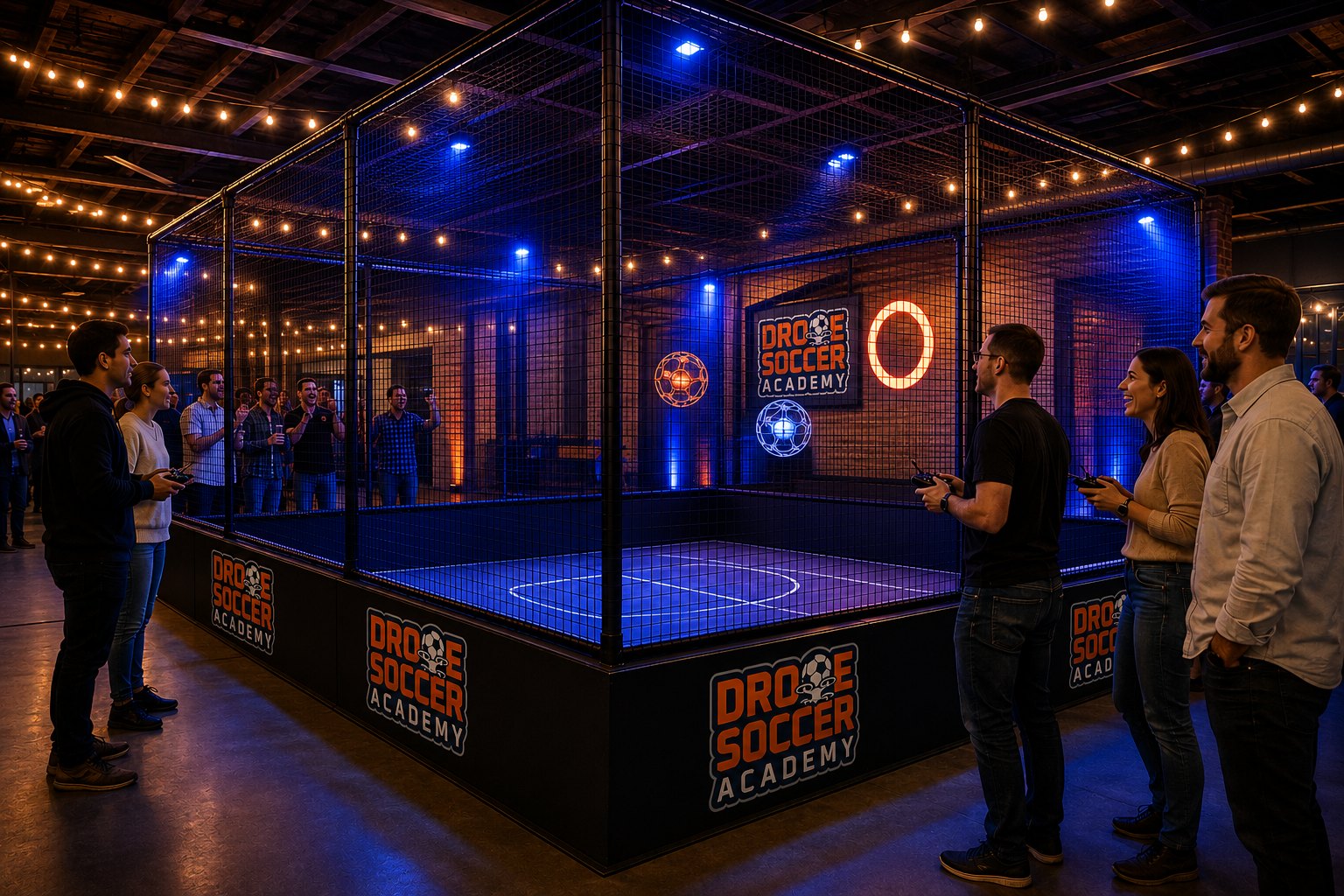
Imagine five-a-side football, lifted three meters into the air, played with caged drones instead of feet. That is drone soccer: a fast, physical, genuinely new team sport that happens to teach engineering while it entertains.
The basic idea
Each drone lives inside a protective carbon cage, so collisions are part of the game rather than the end of it. One player per team is the striker — their drone is the only one allowed to score by flying cleanly through the opposing goal ring. Everyone else defends, blocks, and clears the air for their striker.

The result looks like a dogfight and plays like football: spacing, timing, and teamwork beat raw speed every time.
Why it is catching on
Drone soccer is recognized by the FAI, the world air-sports federation, which means there is a real competitive ladder — from school leagues to world championships.
It is a real sport
Matches are refereed, timed, and scored. Teams train. There is a season. That structure is what turns a cool gadget into something kids stick with for years.
It is STEM in disguise
Behind every good pilot is a drone that has been tuned, repaired, and re-tuned. Players learn electronics, basic aerodynamics, and problem-solving without ever feeling like they are in a classroom.
What a match looks like
Two teams of up to five drones each take the arena. The clock starts, the strikers hunt for a gap, and the defenders form a moving wall of cages in front of their goal. A single clean pass through the ring is a goal — then everyone resets and it starts again.
The first time you see a striker thread a defended ring at full speed, you understand why this sport travels.
Where to see it
The fastest way to get it is to watch it live. We run demos and open sessions in Cluj-Napoca — bring a curious kid, or come fly yourself.